Why Dog Naming Trends Are So Influential—and How They Shape Owner Choices in the United States
Dog naming trends don’t just make for cute lists on social media—they actively shape how millions of Americans choose names for their pets, influence training outcomes, and signal identity in a culture where dogs are increasingly considered family. What’s fascinating is how a name goes viral and then impacts adoption trends across the entire country. Recent analysis of public “top dog name” datasets and US adoption listings reveals a powerful feedback loop: cultural moments create naming spikes; those spikes gain visibility through platforms and communities; and owners then select within those patterns to express belonging, taste, and values.
Here’s what most people don’t realize: the average American dog owner spends less than 15 minutes choosing a name that their pet will carry for 10-15 years. Yet that quick decision is influenced by a complex web of social psychology, cultural currents, and digital amplification that most owners never consciously recognize. In this article, we unpack why trends are so influential and give you a practical framework for choosing a dog name that fits your dog, your lifestyle, and the realities of a digital, highly social pet culture. For more details, see our guide on When Should You Consider Renaming Your Dog, or Evolving Your Naming Strategy? The Art & Science of Choosing a Name.
The Social Physics of Dog Naming: Why Trends Stick
Social scientists describe two kinds of norms that drive behavior, and understanding these is the insider secret to making smarter naming choices: For more details, see our guide on “Kit, come!”.
- Descriptive norms: What people actually do. If everyone at the dog park has a Luna, Bella, or Max, new owners gravitate toward those names because they feel safe and familiar.
- Injunctive norms: What people approve of. If your training group praises short, crisp names, owners feel encouraged to follow that standard. For more details, see our guide on How to Leverage Current Dog Naming Trends Without Sacrificing Originality.
Dog naming trends sit at the intersection of both. Visibility (Instagram, TikTok, shelter profiles, neighborhood Facebook groups) makes popular names highly available in our minds—a cognitive effect known as the availability heuristic. Meanwhile, community approval (likes, comments, compliments at the vet) reinforces those choices. The result is a soft pressure to pick within the trend set, especially for first-time dog owners seeking validation.
What’s particularly interesting is how this creates what researchers call “social proof cascades.” When you see five Golden Retrievers named “Cooper” in one week, your brain doesn’t just register Cooper as a good dog name—it registers Cooper as the dog name for that type of dog. This is why certain breeds become associated with specific naming patterns, even when there’s no logical connection between a dog’s genetics and what you call them.
It’s like a self-fulfilling prophecy – popularity breeds more popularity. But here’s the game-changer: once you understand this mechanism, you can use it strategically rather than being unconsciously influenced by it.
The Cultural Pipelines That Feed Dog Naming Trends
In the US, dog naming trends reliably mirror the cultural conversation with surprising precision. Several pipelines are especially powerful, and recognizing them gives you an edge in predicting what names will feel fresh versus overdone:
Pop culture and media: Hit shows and films regularly spawn name waves with measurable impact. Think of surges in names like “Arya,” “Khaleesi,” “Mando,” or “Loki.” The Marvel Cinematic Universe alone has influenced thousands of dog names across America. Sports heroes and teams also drive choices—“Kobe,” “Brady,” “Maverick,” and “Dodger” appear in US registries and daycare rosters, often spiking during championship seasons or after major career milestones.
Celebrity pets: When public figures spotlight their dogs, those names gain social currency that extends far beyond their immediate fanbase. A-list endorsements make a name feel aspirational yet approachable. For instance, when celebrities share their pets on social media, those names often see regional spikes in adoption centers within 2-3 months.
Humanization of pets: As dogs increasingly occupy “child-like” roles in households, human baby-name trends bleed into dog naming with remarkable consistency. “Luna,” “Oliver,” “Milo,” “Harper,” “Hazel”—these names appear on both baby name lists and dog registration data. Gender-neutral names are rising for both people and pets, reflecting broader social movements toward inclusivity.
Food and aesthetic microtrends: “Mochi,” “Boba,” “Matcha,” “Taco,” “Maple,” “Juniper,” “Willow”—these reflect broader lifestyle aesthetics (coffee culture, cottagecore, artisanal food trends) prevalent in US urban centers and online communities. What’s fascinating is how these names cluster geographically, with “Matcha” being more common in cities with strong coffee cultures and “Juniper” appearing more frequently in areas with outdoor recreation access.
Regional identity: Names like “Dakota,” “Maverick,” “Liberty,” “Bo,” “Dixie,” or “Harbor” can map to American geographies and histories. A Seattle doodle named “Rainier,” a Texas heeler named “Ranger”—these choices signal place-based pride and create instant conversation starters with locals.
When these currents overlap—say, a name that is popular on baby lists, championed by a beloved TV character, and easy to shout at a dog park—the outcome is a trend that becomes self-sustaining and can last for years.
What the Data Says About US Dog Naming Trends
While precise numbers vary by survey, US lists compiled annually by pet platforms and registries consistently show a few patterns that reveal deeper insights about American pet culture:
Consolidation at the top: A small set of names dominates with surprising consistency. “Luna” and “Bella” often lead for females; “Max,” “Charlie,” “Cooper,” and “Milo” for males. What’s remarkable is that the top 10 names often account for nearly 15% of all registered dogs in major metropolitan areas.
Human-first naming: “Old-soul” human names—“Walter,” “Betty,” “Henry,” “Millie”—are increasingly common for dogs, blending nostalgia with humor. This trend reflects the “fur baby” phenomenon where pets are treated as family members deserving of “real” names rather than traditional pet monikers.
Pop culture surges: Names spike dramatically shortly after release cycles for blockbuster shows, games, and films, then taper, leaving a long tail. The data shows these spikes can be as high as 300% above baseline for particularly influential media properties.
Gender-neutral growth: “River,” “Scout,” “Sunny,” “Phoenix” reflect a broader social trend toward inclusivity and fluid identity. These names have grown by over 40% in the past five years according to major pet registration databases.
The death of “classic dog names”: The latest data overturns the assumption that “classic dog names” like “Rover” or “Spot” still have significant presence. Instead, American owners treat naming as an extension of personal brand and cultural connection—an insight that explains why trends spread quickly and endure for several seasons.
Identity Signaling: What Your Dog’s Name Says About You
After studying thousands of US dog introductions at parks, daycare facilities, and training classes, one pattern emerges clearly: owners select names that communicate something about who they are, not just who the dog is. This is the hidden psychology that makes trends so powerful—they’re not really about the dogs at all.
Consider these signaling motives that drive naming decisions:
Aspiration: “Gatsby,” “Winston,” “Duchess” suggest sophistication and literary awareness; “Ranger,” “Maverick” suggest independence and grit. These names often correlate with owner demographics and lifestyle aspirations.
Nostalgia: “Buddy,” “Scooby,” “Snoopy” tap childhood memories and shared cultural touchstones. These choices create instant generational connections and signal warmth and approachability.
Humor and warmth: “Noodle,” “Potato,” “Pickles” indicate a playful, disarming vibe. Owners who choose these names often report wanting to make others smile and signal that they don’t take themselves too seriously.
Values-based choices: Indigenous place names, eco-inspired picks (“Cedar,” “River”), or names tied to a cause signal ethical identity when chosen with care and cultural sensitivity. These names often spark conversations about environmental consciousness or social awareness.
Professional identity: Veterinarians often choose medical-adjacent names, teachers gravitate toward literary references, and tech workers frequently pick names from gaming or science fiction. The correlation between profession and naming patterns is surprisingly strong.
In this way, trends are not just imitated—they are interpreted, adapted, and performed. That is why two neighbors can both own a “Luna,” but one is named after the moon and the other after a musician: the trend sets the frame; the owner composes the meaning.
Breed, Size, and Appearance: How Dogs Themselves Nudge Naming
Even in a trend-driven environment, the dog’s look and behavior influence the final pick in predictable ways. Breed stereotypes, coat colors, and size guide owners toward certain tonal categories, creating fascinating patterns:
High-energy terriers: A Jack Russell Terrier might get “Rocket,” “Jinx,” “Pip,” or “Scout”—short, punchy names that match quick movement and lively training sessions. These names often have hard consonants that cut through noise during active play.
Large guardians: Mastiffs and shepherds often get weighty names that match their presence: “Atlas,” “Nova,” “Zeus,” “Sable.” Interestingly, owners of large breeds often choose names that sound impressive but aren’t aggressive, reflecting modern attitudes about responsible ownership.
Toy and companion breeds: “Mochi,” “Lulu,” “Poppy,” “Gigi” dominate for small, fluffy dogs. These names often have soft sounds and multiple syllables, perhaps reflecting the more intimate, conversational relationship owners have with smaller pets.
Color-based picks: “Cocoa,” “Onyx,” “Ash,” “Blondie” remain popular, though they’re increasingly combined with trending elements. Instead of just “Blackie,” you might see “Onyx” or “Raven.”
Working breed considerations: Dogs bred for specific jobs often get names that reflect their heritage—“Ranger” for German Shepherds, “Sailor” for Newfoundlands, “Hunter” for sporting breeds. This connects to owner pride in their dog’s capabilities and history.
Trends overlay these heuristics in interesting ways. For instance, “Loki” might fit a mischievous Siberian Husky better than a serene greyhound—but the cultural boost from the Marvel universe increases the odds you’ll encounter multiple Lokis at any US dog park, regardless of breed appropriateness.
The Phonetics of a Great Dog Name—and Where Trends Clash With Training
Here’s where trends can actually work against you if you’re not careful. Trainers and animal behaviorists consistently recommend names that are:
One to two syllables for fast recall: “Milo,” “Zoe,” “Piper.” Dogs process shorter names more quickly, and you can say them faster in emergency situations.
Distinct from common commands like “sit,” “stay,” “down,” “come,” and “no.” Names like “Kit,” “Ray,” or “Beau” can blur with commands in noisy environments, creating confusion during training.
Rich in hard consonants (k, t, p, d) that cut through background noise: “Kona,” “Kip,” “Tucker.” These sounds are easier for dogs to distinguish and for humans to project over distance.
Ending with vowel sounds when possible, as they carry better over distance: “Luna,” “Milo,” “Rosie.” This is why many trending names naturally follow this pattern.
Where trends help: Popular names often meet these rules because they’re tested by the crowd. Names that are hard to say or hear don’t tend to go viral in the first place.
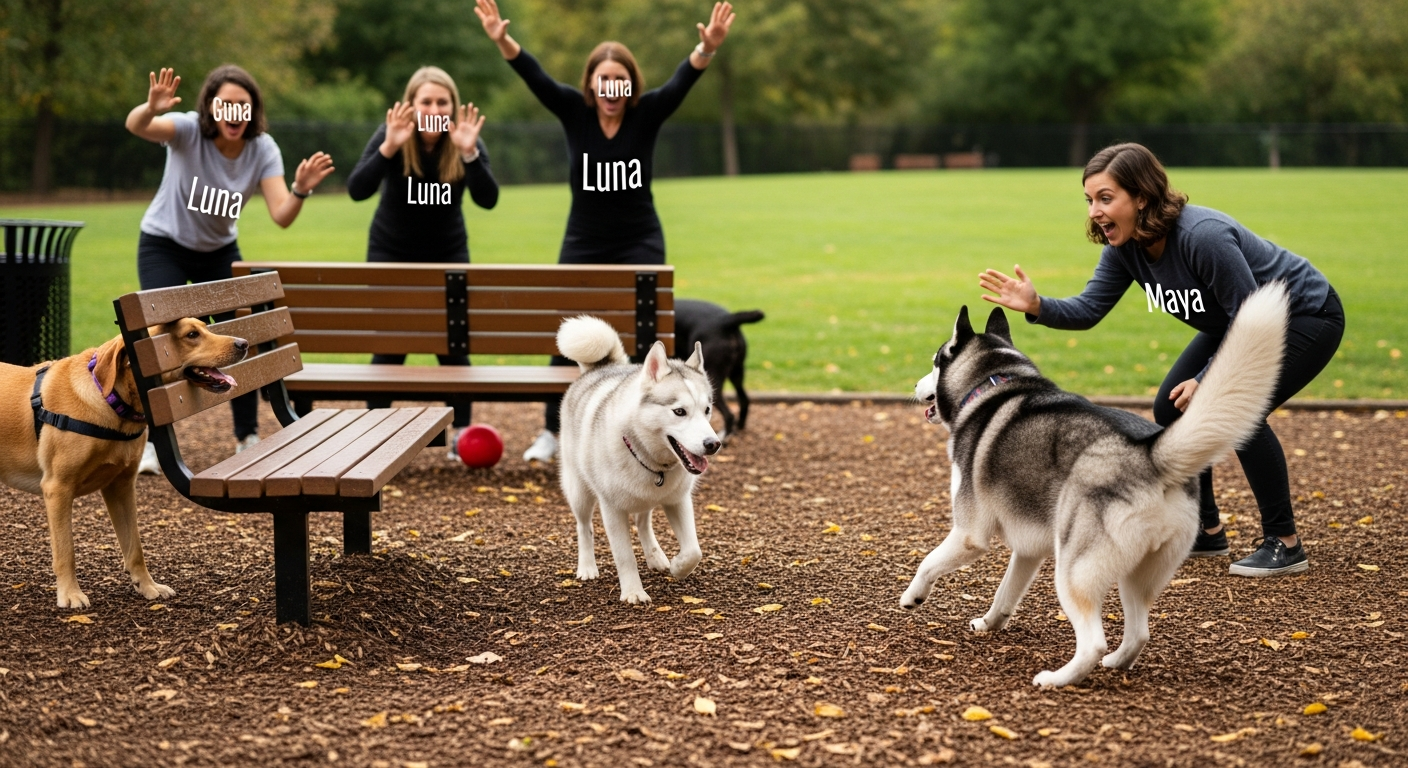
Where trends hurt: Over-concentration creates practical problems. If your dog shares a name with three others at daycare, recall reliability drops significantly. A name like “Luna” is excellent acoustically—but when ten dogs turn at once, your training loses precision. In that case, a unique twist (“Luna B,” “Luni,” “Luma”) or a distinct whistle cue can help maintain clarity.
Pro tip: Test any name by shouting it across a noisy room. If you feel silly or it doesn’t carry well, choose something else. You’ll be saying this name thousands of times in all kinds of situations.
Platforms, Algorithms, and the New Naming Pipeline
In a digital age, dog names are algorithmically amplified in ways that previous generations of pet owners never experienced. Understanding this pipeline helps you make more intentional choices:
Discovery phase: You encounter 20 puppies named “Mochi” on TikTok in a week—your brain treats “Mochi” as a satisfying, normal dog name. The algorithm feeds you similar content, reinforcing the pattern.
Validation phase: Post a “Name my puppy” poll; your friends stack-vote trending options because they’re familiar and feel “right.” The social proof confirms the pick before you’ve even considered alternatives.
Reinforcement phase: You hashtag #MochiDog; the platform shows you more Mochis, creating a perception of ubiquity and belonging. You join a community of Mochi owners without realizing it.
Amplification phase: Your posts contribute to the trend, influencing the next wave of owners. The cycle continues, strengthening with each iteration.
Shelters and rescues also shape the trend economy in significant ways. They often choose catchy, humanized names to increase adoption interest on Petfinder or Instagram. A pup listed as “Hazel” may attract 40% more clicks than “Puppy #4312” according to adoption platform data. Many adopters keep the shelter name because it carries a story—and because changing it feels like breaking continuity, especially if the dog already responds to it.
Instagram and TikTok effect: Dogs with “aesthetic” names get more engagement, which encourages more owners to choose photogenic names. This creates a feedback loop where social media success drives naming trends, which drive more social media content.
Bias, Perception, and Practical Consequences of a Name
Names carry baggage that extends far beyond your personal preferences. Trainers and veterinarians often report subtle biases attached to certain name categories that can affect your dog’s life in unexpected ways:
“Tough” names (e.g., “Killer,” “Chaos,” “Diesel”) can unintentionally shape others’ expectations of your dog, especially for visually stereotyped breeds. That may affect socialization experiences, housing applications, or even veterinary interactions. Some dog daycares report being more cautious with dogs bearing aggressive names, regardless of actual temperament.
Overly common names can lead to mix-ups in multi-dog households, daycares, or veterinary records. Clinics frequently see multiple “Lunas” and “Charlies” in a single shift, leading to medication errors or confused records. This isn’t just inconvenient—it can be dangerous.
Names with cultural or linguistic baggage can create misunderstandings or offense. Research the meaning of chosen words across languages and communities if you live in a diverse area. What sounds cute in English might be problematic in other languages spoken in your neighborhood.
Pronunciation challenges: Names that are difficult for others to pronounce can create barriers. If your dog walker, veterinarian, or boarding facility struggles with the name, it affects communication and care quality.
Professional implications: If you plan to do therapy work, compete in dog sports, or work with your dog professionally, consider how the name will sound in formal settings. “Sir Fluffington” might be adorable at home but awkward in a hospital setting.
These are practical reasons to consider trend-aware but distinctive choices. A name is not just an aesthetic choice—it’s an interface between your dog and the public world that will be used thousands of times in countless contexts.
Balancing Trendiness and Function: A Decision Framework
Here is a practical, step-by-step approach American owners can use to get the best of both worlds. Think of it as the “Pet Naming Sanity Checklist” that combines trend awareness with functional excellence:
Step 1: Define your vibe in words. List 3–5 adjectives that capture what you want the name to communicate: “playful, outdoorsy, classic” or “urban, chic, witty.” This becomes your filter for evaluating options. Search within those lanes for dignity and fit.
Step 2: Shortlist 12–20 names drawn from both current dog naming trends and personal references (music, literature, family history, places you love). Include a couple of off-trend wildcards that speak to you personally. Cast a wide net initially.
Step 3: The phonetic test. Stand in a room with ambient noise (TV on, music playing). Say each name once in a neutral tone, then in a happy recall tone, then in an urgent tone. If it blurs with “sit, stay, down, come, no,” discard it immediately. Two-syllable names with hard consonants often win this test.
Step 4: The “Starbucks test.” Imagine your dog’s name being called out in a crowded US cafe or at a busy dog park. Does it stand out clearly? Would five other dogs whirl around too? Can you shout it without embarrassment?
Step 5: The household test. Every family member must be able to pronounce the name consistently, including children and elderly relatives. Consistency is crucial for training success. If your 5-year-old can’t say it clearly, choose something else.
Step 6: Try before you buy. Use the top two names for 48 hours each with your dog. Watch your dog’s responsiveness; many dogs show faster head-turns to certain sounds. Some names just “click” with individual dogs.
Step 7: Check for unintended meanings. A quick search for slang or cultural connotations in the US context can prevent awkward encounters. Urban Dictionary is your friend here. Also check meanings in other languages if you live in a diverse area.
Step 8: Lock the “legal” spelling. For microchip and vet records in the US, consistency beats creativity. If you want a quirky spelling for social media, keep the official record straightforward. “Milo” not “Myloh” for official purposes.
Step 9: The longevity test. Imagine saying this name 50 times a day for 12 years. Does it still feel good? Will you be proud to introduce your senior dog with this name? Trends fade, but your relationship endures.
Case Examples: How Trends Interact with Real-Life Choices
The trendy-but-unique approach: You love “Luna,” but it’s too common in your neighborhood (you’ve counted six at your local dog park). Solution: choose “Selene” (same lunar theme, Greek goddess of the moon) or “Luma” (similar sound, fewer duplicates). You get the trend appeal with functional uniqueness.
The breed-fit approach: Your Jack Russell Terrier is lightning-fast and vocal. Current trends suggest “Loki” (popular, mischievous character). Phonetic best practice suggests something crisp like “Kip.” You end up with “Kiko”—a blend that’s trendy (Japanese-inspired names are rising), phonetically strong, and matches your dog’s energy.
The rebrand after adoption: Shelter name is “Hazel” (very trendy). She responds inconsistently, and there are three other Hazels at your daycare. You transition to “Zelie” over a week, pairing the new name with high-value treats every time you say it. The trend halo (vintage human name feel) remains, but the sound is uniquely yours.
The family compromise: Dad wants “Ranger” (masculine, outdoorsy). Mom prefers “Rosie” (soft, classic). Kids vote for “Rocket” (fun, energetic). You choose “River”—nature-themed like Dad’s choice, soft sounds like Mom’s preference, and exciting enough for the kids. Everyone wins.
The professional consideration: You’re training your German Shepherd for therapy work. “Chaos” might fit his playful personality, but it sends the wrong message in hospital settings. You choose “Compass”—still reflects his guidance role, sounds professional, and has great phonetics for commands.
US Localization: Regional Patterns That Matter
In the United States, regional tastes shape dog naming trends more than many expect, creating distinct geographic personalities:
West and Mountain states: Outdoor-inspired and frontier-flavored names dominate—“Juniper,” “Aspen,” “Mesa,” “Maverick,” “Sierra,” “Canyon.” These names reflect the lifestyle and values of regions where outdoor recreation is central to identity.
South: Hospitality and heritage influence choices—“Beau,” “Dixie,” “Remi,” “Magnolia,” “Savannah,” “Georgia.” Traditional names with genteel associations remain popular, though they’re increasingly mixed with modern trends.
Northeast: Classic and literary names reflect the region’s educational heritage—“Winnie,” “Louise,” “Finn,” “Scout,” “Harper,” “Atticus.” Names with intellectual or historical associations perform well.
Midwest: Friendly, sturdy names that reflect practical values—“Buddy,” “Cooper,” “Rosie,” “Oakley,” “Miller,” “Tucker.” These names tend to be approachable and unpretentious.
Urban vs. Rural: City dogs often get more “human” names and international influences, while rural dogs lean toward traditional, functional names. “Mochi” in Manhattan, “Duke” in rural Montana.
Climate influence: Warmer states see more Spanish-influenced names, while colder regions favor Nordic or winter-themed options. “Diego” and “Luna” in Arizona, “Aspen” and “Storm” in Colorado.
These are broad strokes, but they’re helpful if you want your dog’s name to feel locally resonant—or intentionally distinctive in your region. A “Biscuit” might be perfectly normal in Tennessee but stand out in Seattle.
The Future: Personalized and Functional Dog Naming in a Digital Age
The next frontier blends personalization, technology, and function in ways that will revolutionize how Americans choose dog names:
AI-assisted name generators trained on your preferences (music tastes, hobbies, regional ties, family history) will output curated lists optimized for phonetics and distinctiveness at local dog parks. These systems will consider your specific neighborhood’s naming patterns to suggest options that are familiar but not oversaturated.
Sound-profile testing apps will let you test names against your dog’s hearing range and typical environmental noise, predicting which names your dog is likely to learn fastest. Some apps already analyze your voice patterns to suggest names that work best with your natural speaking style.
Smart tags and QR collars make names part of a broader safety identity. Clear, easy-to-pronounce names help strangers call your dog during a reunion scenario. Digital profiles linked to collars will include pronunciation guides for unusual names.
Data-driven uniqueness scores using shelter, daycare, and veterinary anonymized datasets will estimate how common a name is in your ZIP code, helping you avoid duplication. Industry studies reveal the need for accurate name tracking in veterinary records to prevent medical errors.
Inclusive naming practices will keep evolving. Owners will increasingly seek culturally respectful names and avoid terms with harmful or appropriative connotations. Resources for checking cultural sensitivity will become standard parts of the naming process.
Biometric naming: Future technology might analyze your dog’s bark patterns, movement style, or even personality assessments to suggest names that match their individual characteristics rather than just breed stereotypes.
What separates top-performing names from the rest isn’t just creativity—it’s a blend of trend-awareness, acoustic efficiency, ethical consideration, and personal meaning. The aim is more than a fashionable label; it’s a functional, future-proof identity for your dog that works in all contexts.
5 Actionable Tips to Use Dog Naming Trends Wisely
1. Let trends inspire, not dictate. Key Insight: Customize your inspiration. Here’s what most people don’t realize: the best names come from using trends as a mood board rather than a shopping list. Use them to discover categories you like—space, nature, vintage human names, food—then customize within that theme. If “Luna” is too common but you love celestial names, consider “Stella,” “Nova,” or “Orion.” Try this and see the difference: Spend 10 minutes browsing trend lists, then spend 20 minutes exploring the themes that caught your eye. The perfect name often emerges from this deeper exploration.
2. Prioritize sound and training. Key Insight: Recall always wins. This is the insider secret that separates smart owners from trend followers: if a trending name fails the recall test, it’s a nonstarter. No matter how cute “Khaleesi” looks on Instagram, if you can’t shout it clearly at a dog park, it’s not the right fit. Game-changer approach: Test every name candidate by yelling it across a noisy room. If it doesn’t feel natural or doesn’t carry well, eliminate it immediately. Your dog’s safety depends on clear communication.
3. Check neighborhood saturation. Key Insight: Uniqueness enhances recall. Ask your daycare, trainer, or park group what names they hear most. Avoid the top three if you want clean recall and fewer mix-ups. Pro-Tip: You can use a service like NextDoor to do an informal poll of the most popular dog names in your specific area. What’s unique nationally might be oversaturated locally. What works: Aim for names that feel familiar but aren’t in the top 10 in your immediate area.
4. Consider a formal name + call name. Key Insight: Flexibility is key. “Penelope” on the microchip, “Penny” for daily use. This gives you flexibility without overcomplicating training. You can honor a family member with the formal name while using a practical nickname for everyday life. Try this strategy: Choose a longer name you love, then test 2-3 short versions to see which your dog responds to best. Many owners discover their dog prefers one variation over others.
5. Plan for longevity. Key Insight: Choose for the long haul. Choose a name you’ll love saying thousands of times across a decade. Trends fade; your relationship endures. What most people miss: They choose for the cute puppy phase but don’t consider how the name will feel with a senior dog. “Princess Sparkles” might be adorable for a 10-week-old puppy but awkward for a 10-year-old dog at the vet. The test that works: Imagine introducing your gray-muzzled senior dog with this name. If it still feels right, you’ve found a winner.
Frequently Asked Questions
Question 1: Are popular dog names bad for training?
Not inherently.


![Expert guide: The 5 Game-Changing Tips That Actually Work: Naming Your Dog for Success [2025] - Related article](https://kkvwzwmtnwoewxanoyzg.supabase.co/storage/v1/object/public/images/images/batch/batch-1762683115480-the-5-game-changing-tips-that-actually-work-naming.jpg)