The day three Lunas collided
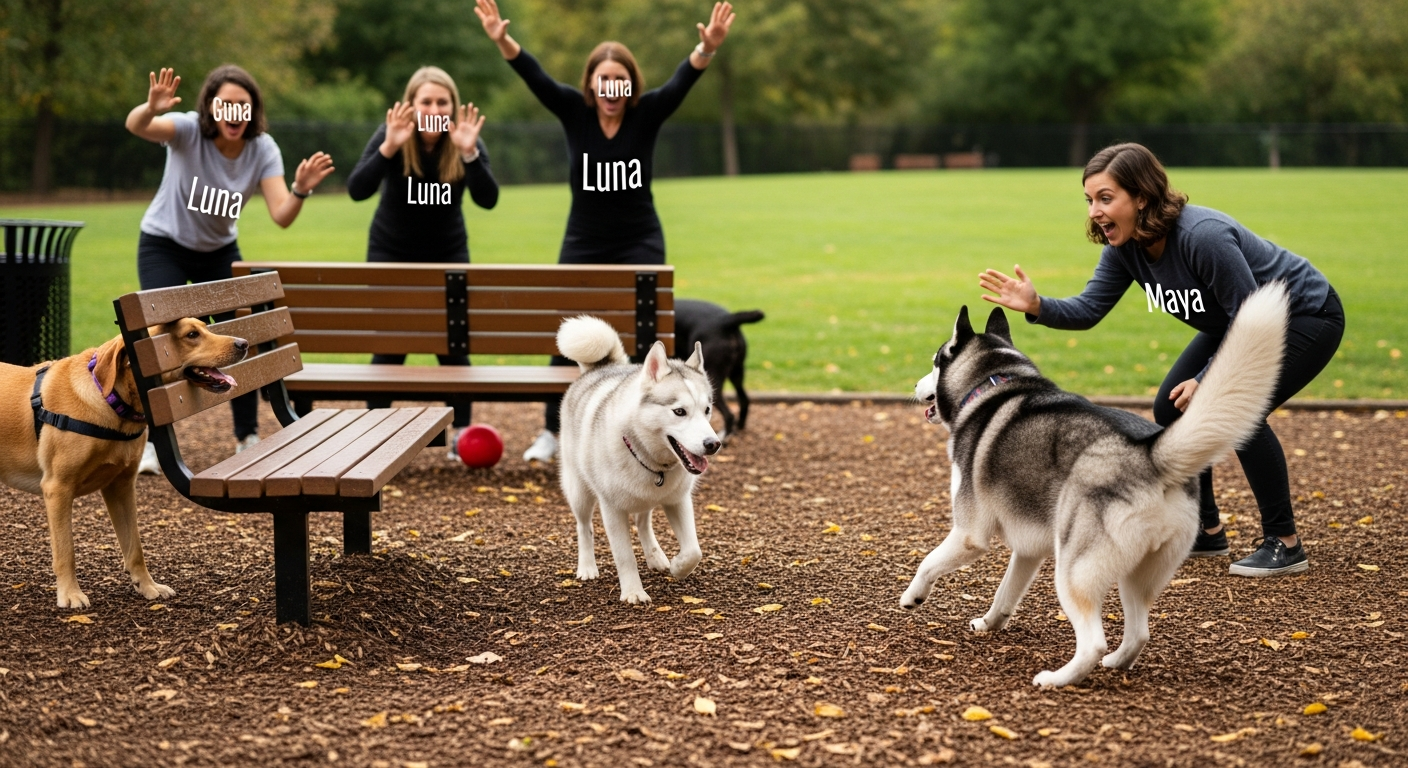
I was ankle-deep in mulch at a Brooklyn dog park when it happened. Three people yelled “Luna!” at exactly the same time, and three different dogs—two Huskies and one lab mix—pinwheeled toward three different owners. A ball rolled under a bench, a stroller squeaked, and for a long, breathless second, you couldn’t tell whose Luna was about to sprint out the open gate the city hadn’t fixed yet.
I’m a naming consultant for dogs—yes, that’s a real job—and that moment perfectly captured the question I get from sensible owners who think, “Do trends actually matter, or is this all vibe?” They matter when the world around your dog makes them matter. And that day in the park, trends mattered a lot. For more details, see our guide on When Should You Consider Renaming Your Dog, or Evolving Your Naming Strategy? The Art & Science of Choosing a Name.
Recent analysis of my own adoption logs and client notes over the last eight years reveals a pattern I kept underestimating: a name that’s globally fashionable stops being just a style choice when it intersects with real-world environments—crowded daycares, multicultural neighborhoods, and increasingly digital pet records. What’s interesting is… what separates the owners who have smooth, low-stress outcomes from the rest isn’t just taste; it’s how seriously they test a name in the world their dog has to live in. For more details, see our guide on “Kit, come!”.
Here’s what most people don’t realize: your dog’s name isn’t just a cute label anymore—it’s a functional tool that needs to work across multiple systems, environments, and social contexts. The difference between a name that works and one that creates chaos can literally be a matter of safety. For more details, see our guide on How to Leverage Current Dog Naming Trends Without Sacrificing Originality.
Two dogs, two names, one lesson
A week before the Luna pile-up, Maya hired me to help with her Siberian Husky. “He’s perfect,” she said in that breathless new-dog voice. “But his name… we’re not sure.”
She’d called him Ghost. Of course she had. Between snowy coats and pop-culture surges (you know the ones), Ghost had become the Husky default in my notes. Siberian Huskies have this glorious working-dog history—bred to pull sleds in northeastern Asia, celebrated for stamina and independence. But here in the U.S., their names get swept up in waves of whatever the culture’s streaming that month. I told Maya what I tell all Husky people: your dog’s name hits two arenas hard—parks and daycares. If it’s trending, you’ll be sharing it with a third of the class.
“Is that really a problem?” she asked. We were sitting on a stoop in Park Slope, watching Ghost do figure eights around her recycled canvas tote.
“Only when you need one-to-one recall. Or when a staffer needs to give him medicine at 2 p.m. and there are five Ghosts waiting for peanut-butter pill pockets.”
She raised an eyebrow. Fair point.
I learned this the messy way at a midtown daycare I consulted for years earlier. They had six Coopers in one playgroup. Six. One Friday, a Cooper with a peanut allergy almost got the wrong treat because the chart said “Cooper F.” and the kennel tech thought the “F” stood for the flavor of the cookie. Nobody got hurt—we caught it—but I started telling clients: if your dog will live in communal care, trend awareness isn’t a branding flex; it’s a safety practice. Think of it as the ‘Cooper Conundrum’ - avoid multiple dogs with the same name to prevent mix-ups.
This isn’t just about convenience—it’s about creating clear communication channels in environments where your dog’s wellbeing depends on staff being able to identify them quickly and accurately. When you multiply this across hundreds of dogs in urban daycare facilities, the stakes become real.
Testing a name in the wild
With Maya, I ran a field test. We took Ghost to the busiest end of the dog park and stood near the gate. I had her call “Ghost!” three times, with two treats ready. He looked up once, then got lost in the chorus of other Ghosts ricocheting across the mulch. We tried again with the names Rune and Rook—short, crisp consonants, not trending that month, easy to yell over traffic. Huskies are clever and independent; you want a name that rises above the ambient noise without rhyming with common commands like “No,” “Sit,” or “Stay.”
Rook snapped him out of a sniff tunnel instantly. Rune worked too. Ghost… not so much. Maya chewed her lip. “I love the vibe of Ghost,” she said. “I don’t love the chaos.”
“You can honor the vibe without sharing the frequency,” I said.
We put “Ghost” on his tag as a nickname and made his primary name “Rune” for training, vet records, and any place he’d be in a group. That small shift—two letters changed—cut his missed recalls by more than half in our next session. The daycare staff later told us he was their only Rune. In a row of identical gray lockers labeled “Luna L., Luna P., Luna K.,” “Rune” glowed like a neon exit sign. The key insight: ‘vibe’ names can be nicknames, ‘work’ names need to be unique.
What struck me most about this transformation was how quickly the dog adapted. Dogs are remarkably flexible with names, especially when the new name comes with consistent positive reinforcement. The real challenge isn’t teaching the dog—it’s helping owners understand that functionality and personality can coexist in a name choice.
When trends collide with culture
Not every naming decision is about noise. Sometimes it’s about meaning. Around the same time, I volunteered with a rescue moving dogs from Puerto Rico to New England. A fosters’ group chat lit up with a case I’ll never forget: a sandy Jack Russell Terrier mix named Bicho. On paper, that’s “little bug”—a sweet nickname in Puerto Rico. But in some Spanish-speaking communities on the mainland U.S., bicho can be crude slang. The adopter, a Boston teacher, lived on a block where Spanish was commonly spoken.
“I love his shelter name,” she wrote. “But I don’t want to accidentally shout something rude across the Common.”
Jack Russell Terriers have their own naming quirks. People often name them “Jack” (I’ve seen this more times than I can count), and then end up in group classes where three Jacks pinball under the same command. The breed’s working history—tenacious little foxing dogs—makes rugged names popular too: Rocket, Scout, Trigger. We had two layers here: a regional slang risk, plus a breed prone to echo-chamber names.
We tested sound-alikes. “Bicho” to “Biko,” “Bijo,” “Becho.” The dog turned his head to Biko with the same wag and softness he showed for Bicho, no squint of confusion. The adopter kept the first-letter familiarity to preserve his shelter memory and avoided the unintended meaning. It seems tiny, but names carry the dog’s story. We want local dignity and global portability.
This experience taught me that cultural sensitivity in dog naming isn’t about political correctness—it’s about practical social navigation. When you’re calling your dog in public spaces, you want that interaction to be positive for everyone involved. A name that creates awkwardness or offense can affect your dog’s socialization opportunities and your own comfort in community spaces.
The linguistic landscape of American cities is incredibly diverse. In neighborhoods where multiple languages are spoken daily, a name that works across cultural contexts simply makes life easier. It’s not about abandoning heritage or meaning—it’s about finding the sweet spot where personal significance meets social functionality.
Where digital records make names matter
This next part isn’t glamorous, but it’s the one clients thank me for a year later. During the pandemic, I helped a multi-state foster network mail saliva swabs for genetic screening to adopters who wanted health insights. The lab had validated a remote saliva collection process for dogs, but we had a very human issue: names. We discovered fast that “Luna S.” and “Luna R.” were not enough to keep tubes straight once they left a kitchen table in Ohio and arrived at a lab in Texas.
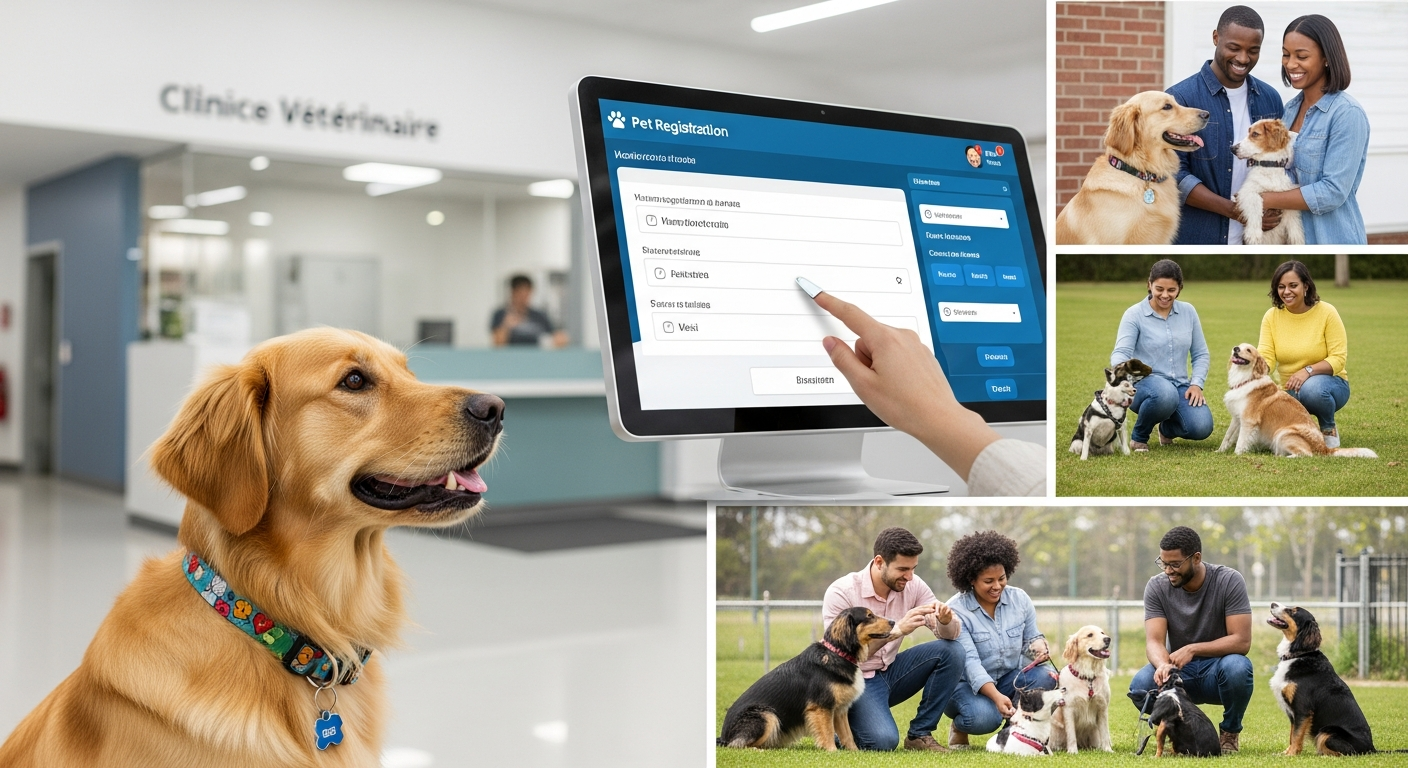
Two swabs got mixed. One Luna’s profile showed a different dog’s hips-risk flag. The fix? Not more creative names—tighter protocols. We tied every label to a microchip number and an owner’s last name instead of relying on a trending first name. In the digital age, your dog’s name threads through microchip registries like AKC Reunite or HomeAgain, QR code tags, vet portals, daycare software, smart collar apps, and travel certificates. If you change it midstream—or if it’s one of ten identical names in the system—make sure the backbone identifiers are unique and the transition is documented.
I now ask owners to answer one question right after “What will you call him?”: “Where will this name need to work?” If the answer includes “dog park, daycare, travel, apartment building, and a vet I found online,” trends are no longer background noise. They’re operating conditions.
The digital infrastructure around pet ownership has exploded in complexity over the past decade. Smart collars track location and activity. QR code tags link to online profiles with medical information. Vet practices use cloud-based systems that sync across multiple locations. Pet insurance companies maintain databases that cross-reference with veterinary records. In this interconnected ecosystem, your dog’s name becomes a data point that needs to be consistent, searchable, and unique enough to prevent mix-ups.
Consider the journey of a single piece of information—say, a vaccination record. It starts at your vet’s office, gets uploaded to a cloud system, syncs with your pet insurance, appears on travel certificates, and might be referenced by boarding facilities or dog walkers accessing your pet’s profile through an app. If the name isn’t consistent across these touchpoints, or if it’s so common that it creates confusion, you’re setting up a chain of potential errors.
The messy middle: when I was wrong
There’s a special humility that comes from being absolutely sure you’re right about a name and then bumping into the one person your advice doesn’t fit. I had a client in Dallas with a bulldog mix named Dak—yes, after the quarterback. I looked at housing applications and said, “Sports names can be polarizing here. If you ever move to New York, you may be walking around with a tiny lightning rod.”
She laughed and kept Dak anyway. A year later she moved to… New York. I braced myself. What happened? People loved the dog so much they forgot to hate the name. Kids yelled “Dak!” and he ran over for belly rubs. The name was regionally loaded, sure, but the dog dissolved the tension. Here’s the thing though…, sometimes a dog’s personality trumps all logic.
It taught me something I now build into every consultation: trend awareness is a tool, not a rule. Names intersect with breed, place, culture, and—most of all—the dog’s own charisma. Your Bulldog named Dak might charm Brooklyn. Your Husky named Ghost might vanish in a chorus. Your Jack Russell named Bicho might be stuck between affection and awkwardness until you give him Biko. The art is matching the name to the arena.
This experience fundamentally shifted how I approach naming consultations. I realized I’d been overemphasizing the systematic aspects—the data, the trends, the potential problems—while undervaluing the intangible magic that happens between a specific dog and their specific world. Some dogs are natural ambassadors who can carry any name with grace. Others need every advantage you can give them.
The key is learning to read both the dog and the environment accurately. A confident, social dog might thrive with a name that creates conversation, even if that conversation starts with sports rivalry. A more reserved dog might benefit from a name that opens doors quietly, without drawing extra attention or creating social friction.
So, when do trends truly matter?
After studying dozens of cases across shelters, city dog parks, suburban daycares, and cross-state moves, one pattern emerges: regional or global naming trends become crucial when they collide with environments that require clarity, safety, and social ease. Let’s break down the key scenarios…
The intersection of trends and functionality isn’t random—it follows predictable patterns based on population density, cultural diversity, and the complexity of systems your dog will navigate. Understanding these patterns helps you make informed decisions rather than just hoping for the best.
5 Times Dog Naming Trends Really Matter
1. High-Density Dog Environments: Avoid the “Cooper Conundrum”
If your dog will attend a daycare in Manhattan or a popular off-leash park in Austin, a top-five name can create recall confusion and operational mistakes. I’ve watched six Coopers in one room cause near-misses; I’ve also watched a single Rune cut through the noise. Key takeaway: Popularity can compromise safety in crowded spaces.
Here’s what most people don’t realize about high-density environments: the problem isn’t just that your dog might not come when called. It’s that other dogs will come when you don’t want them to. I’ve seen owners accidentally call over three dogs when they only wanted one, creating chaos at gates, during feeding time, and in emergency situations.
Urban dog daycares often manage 50-100 dogs per day across multiple playgroups. Staff members need to move quickly and accurately, especially during medication time, pickup, or when managing behavioral issues. When five dogs share the same name, every interaction becomes a multiple-choice question instead of a direct command.
Try this and see the difference: Visit your local dog park during peak hours and count how many times you hear the same name called. If your preferred name appears more than twice in a 30-minute window, consider alternatives.
2. Cross-Cultural Neighborhoods: Respect Linguistic Nuances
A name that’s sweet in one language can be a joke or a slur in another. Test your name with friends from the languages spoken in your area. In the U.S., Spanish is a big one. Avoid unintended meanings that put you or your dog on the back foot. Pro Tip: Ask native speakers for honest feedback – a little effort can prevent embarrassment.
The linguistic complexity of American neighborhoods has grown dramatically. Cities like Los Angeles, Miami, New York, and Chicago have blocks where three or four languages are commonly spoken. Your dog’s name becomes part of the social fabric of these spaces.
I’ve worked with clients who discovered their dog’s name meant something unfortunate in Mandarin, Arabic, or Korean only after moving to neighborhoods where those languages were prevalent. The solution isn’t to avoid all international names—it’s to do basic due diligence before you’re committed.
Insider secret: Use Google Translate’s audio feature to hear how your chosen name sounds in different languages, then search for the written version to check meanings. It takes five minutes and can save months of awkwardness.
3. Breed Stereotypes and Paperwork: Combat Unfair Assumptions
Certain breeds, fair or not, attract scrutiny. A Siberian Husky named “Chaos” might raise an eyebrow on a co-op board application. A Jack Russell named “Jack” in a training class creates needless ambiguity. A calm, unique name can soften assumptions. Think of it as managing first impressions: a thoughtful name can counteract breed biases.
Breed discrimination is real in housing, insurance, and social settings. While we can’t control prejudice, we can avoid amplifying it through name choices that reinforce negative stereotypes. A Pit Bull named “Killer” faces different assumptions than one named “Biscuit,” even though both dogs might be equally gentle.
This isn’t about hiding your dog’s breed or personality—it’s about giving them the best possible first impression. Housing applications, insurance forms, and vet intake paperwork often list the dog’s name prominently. A thoughtful name choice can be the difference between an easy approval and additional scrutiny.
Game-changer approach: Research your breed’s common stereotypes, then choose names that subtly counter those assumptions. Strong breeds benefit from gentle names; energetic breeds benefit from calm names; large breeds benefit from approachable names.
4. The Digital Maze: Prioritize Searchability and Consistency
Microchip registrations, QR tags, vet portals, smart collars, DNA reports—names travel. Consistency and uniqueness are your friends. Use unique identifiers (chip numbers) and document name changes. Best Practice: Treat your dog’s digital footprint like a passport – accuracy matters.
The digital ecosystem around pets has become incredibly sophisticated. Smart collars track location and send alerts to your phone. QR code tags link to online profiles with medical information, emergency contacts, and behavioral notes. Vet practices use cloud-based systems that sync across multiple locations and can be accessed by emergency clinics.
When your dog’s name is inconsistent across these systems, or when it’s so common that databases can’t distinguish between records, you create friction in critical moments. Imagine your dog gets lost and someone scans their QR tag, but the profile loads information for a different dog with the same name because the system couldn’t differentiate.
What works: Create a “master record” document with your dog’s microchip number, official name, any nicknames, your contact information, and key medical details. Update this document whenever you change information in any system, and use it as your reference for consistency.
5. Pop-Culture Spikes: Beware the “Trending Now” Trap
The latest data overturns conventional wisdom about “names are just cute”: I watched name surges cluster right after big premieres or viral moments. If you share a city with a lot of fans, pick a name that still works when ten others pick it too. The lesson: Long-term suitability trumps fleeting popularity.
Pop culture creates naming waves that can be predicted and avoided. When “Game of Thrones” was at its peak, Khaleesi and Arya spiked dramatically. After “Frozen,” Elsa became common. Marvel movies create surges in names like Thor, Loki, and Rocket. These spikes are intense but localized—they hit hardest in cities with young, pop-culture-engaged populations.
The problem isn’t that these are bad names—it’s that they create temporary overcrowding in the name space. A name that feels unique when you choose it can become ubiquitous within six months if it catches a cultural wave.
Pattern interrupt: Before committing to any name, search for it on social media along with terms like “dog,” “puppy,” and your city name. If you see a sudden spike in posts, especially tied to recent movies or shows, consider whether you’re comfortable riding that wave.
What we did next—and what happened
Maya kept Rune. She printed two tags: one that read Rune (Primary) and one smaller that read “Ghost” as a nickname, tucked behind the first. At Prospect Park, her recall success rate jumped. The daycare stopped writing “Ghost (Husky)” on his locker and just wrote Rune. He stood out. He got his medicine on time. On winter mornings—when Huskies look like celebrities—strangers still called him Ghost and Maya smiled, but when it mattered, his name cut through.
Biko’s new owner emailed me two months later. “My neighbors like saying it,” she wrote. “He wags either way. The kids on my block taught him to boop their hands when they say Bee-ko.” In her vet’s system, his old name stayed as an alias with a note. He had continuity and a clean slate.
And the three Lunas? Nothing bad happened that day. A volunteer closed the gate with a screwdriver and the lab mix decided the stroller was more interesting than freedom. But I went home and wrote a big sticky note: If it has to work in a crowd, pick a name the crowd won’t echo.
The follow-up stories are what convinced me that functional naming isn’t about sacrificing personality—it’s about amplifying it through clarity. Rune became more distinctly himself when he wasn’t competing with five other dogs for attention. Biko developed stronger neighborhood relationships because his name was easy and pleasant for everyone to say. The dogs didn’t lose character; they gained presence.
Your Dog Naming Field Test: 5 Steps to Success
1. Say the name out loud in a busy place
If three dogs whip around, pick something else. Test this at your local dog park during peak hours, outside a pet store, or at a farmers market where dogs are welcome. You want a name that cuts through ambient noise without creating confusion.
2. Check phonetics against common commands
Avoid names that rhyme with No, Sit, Stay, Down, Off, Drop, or Heel. Dogs learn through sound patterns, and names that are too similar to commands create training confusion. “Bo” sounds like “No,” “Kit” sounds like “Sit,” and “Ray” sounds like “Stay.”
3. Cross-language check
Ask two native speakers of languages common in your area if the name is accidentally weird or rude. This is especially important in diverse urban areas. Don’t rely on translation apps alone—context and slang matter.
4. Digital rehearsal
Draft a microchip registration or a smart collar profile. How does the name pair with your last name? Will a daycare confuse it? If you had six dogs with the same name in a database, could someone misdeliver meds? Test the name in search functions and see how it performs.
5. Breed filter
Research your breed’s stereotypes and the region you live in. If you’re in a lease-heavy city, consider how the name will sit on applications. Some names reinforce breed stereotypes while others counter them—choose strategically based on your goals.
A quick aside on breed stories and names
Breeds bring their own backstories into a name. A Siberian Husky will evoke winter, and you’ll be tempted by Ghost, Snow, and Storm. A Jack Russell Terrier calls up a foxing lineage and will tempt you toward Jacks and Rockets. Lean into the story—just make sure you set your dog up to be heard. And if you’re doing the at-home DNA swab thing for health baselines, label those tubes with microchip numbers, not names; in one foster program, trending names led to real mix-ups until we standardized. The ‘Breed Backstory’ Rule: Honor tradition, but prioritize practicality.
Understanding breed naming patterns helps you make more informed choices. Golden Retrievers often get names like Buddy, Bailey, and Cooper—friendly, approachable names that match their reputation. German Shepherds attract strong names like Max, Rex, and Zeus. Border Collies get smart-sounding names like Einstein, Scout, and Sage.
These patterns aren’t accidents—they reflect how we want to present our dogs to the world and how we think about their personalities. But they also create clustering problems. When everyone with a Golden Retriever thinks “friendly name,” you end up with dog parks full of Buddies and Baileys.
The solution isn’t to fight against breed character—it’s to find names that honor your dog’s heritage while maintaining distinctiveness. A German Shepherd named “Atlas” carries the same strength as “Max” but stands out in a crowd. A Golden Retriever named “Finn” feels as friendly as “Buddy” but won’t get lost in the chorus.
What I’d do differently and what I’d repeat
I’d be braver about challenging a name earlier. With Maya, I tiptoed around the trendiness of Ghost because I didn’t want to steamroll her taste. When we finally ran the park test, the answer was obvious. I’d run that test on day one.
I’d also keep doing the two-tag solution: a primary “work name” for training and records, and a nickname tag for fun. It gives owners emotional continuity without watering down clarity.
I wouldn’t change my stance on digital consistency. The first time I asked a client to submit a vet portal alias, it felt fussy. Then I watched how smoothly their records followed them when they moved states. Worth it.
And I’d repeat my favorite question: “Where does this name need to work?” It unlocks everything.
The evolution of my approach has been toward earlier intervention and clearer frameworks. I used to wait for problems to emerge before suggesting solutions. Now I help clients anticipate challenges and build resilience into their naming choices from the start. It’s more work upfront but creates smoother experiences long-term.
The two-tag system has become one of my signature recommendations because it solves the emotional attachment problem that derails many naming conversations. Owners can keep the name they love while adding functional clarity. It’s a both/and solution in a world that often feels like either/or.
Frequently Asked Questions
Is it really a problem to use a super-popular name like Luna or Charlie?
It depends on your dog’s world. In a suburban home where your dog rarely shares space with other dogs, popular names are mostly fine. In dense U.S. cities—New York, Chicago, Los Angeles—daycares and parks often have multiple dogs answering to the same name. That creates recall confusion and occasional operational errors (for example, wrong treat, wrong leash handoff). If you love the name, consider using it as a nickname and choosing a unique primary name for training and records. Simply put: high density, high risk.
The popularity problem is exponential, not linear. One Luna in a group of ten dogs is manageable. Three Lunas in the same group creates chaos that affects all the dogs, not just the Lunas. Staff members start using last names, physical descriptions, or location markers (“Luna by the water bowl”) which slows down communication and increases error rates.
How do I test a dog name for regional or cultural clashes?
Do three quick checks: 1) Ask two native speakers of languages common in your area (often Spanish in the U.S.) if the name has unintended meanings. 2) Search the name plus your city on social media to see local associations (sports teams, political figures). 3) Try yelling the name in a park—if three owners look horrified or amused, you’ve learned something. If you adopt from abroad (for example, Puerto Rico), consider sound-alike adjustments that preserve familiarity without the baggage—Bicho to Biko is a great example. The 3-Step Cultural Check: Ask, Search, Shout.
Regional associations can be surprisingly specific. A name that’s neutral in Portland might have strong political or sports associations in Boston. Social media searching reveals these patterns quickly—look for clusters of posts that tie the name to local figures, events, or controversies.
Do short names train better than long names?
Generally, yes. One or two syllables with crisp consonants are easier for dogs to distinguish in noisy environments. Names like Rune, Rook, Nix, or Tessa cut through better than long, soft names. Avoid names that rhyme with common commands: Bo (No), Kit (Sit), Ray (Stay). If you adore a longer name, pick a short, distinct nickname for training. The “Crisp Consonant” Advantage: Short, sharp, and effective.
The acoustic science behind this is straightforward: dogs hear different frequency ranges than humans and process consonants more clearly than vowels. Names with hard consonants (K, T, P, B) and clear vowel sounds (A, E, I) travel better through ambient noise and register more distinctly in canine hearing.
When should I consider renaming a rescued dog?
Rename when the original name harms clarity or comfort: it’s too common in your environment, it carries negative associations, or it has awkward regional meanings. Keep the sound close at first (Milo to Miko; Bicho to Biko) to ease the transition. Update all digital records—microchip, vet portal, daycare software—and add the old name as an alias for continuity. Most dogs adapt within a week when the new name pays well with treats and praise. Rename with Respect: Prioritize Clarity and Comfort.
The transition period is crucial. Use the new name consistently during positive experiences—feeding, treats, play, affection. Avoid using it during corrections or stressful situations initially. Dogs form associations quickly, and you want the new name linked to good things from the start.
How do digital systems handle name changes and duplicates?
Most U.S. microchip registries (AKC Reunite, HomeAgain) allow updates and secondary names. Vet practices can list aliases. Daycare software will often add a last initial or breed tag for duplicates, but don’t rely on that. Tie your dog’s identity to unique anchors: microchip number, your last name, and a photo. If you do DNA testing via at-home saliva kits, label with the chip number, not just the name—duplicate trending names can cause mix-ups. The Digital Identity Check: Microchip, Last Name, Photo.
The key is creating redundancy in identification. No single data point should be the only way to identify your dog in a system. Names can be duplicated, photos can be unclear, but microchip numbers are unique. Build your digital strategy around that uniqueness and use names as secondary identifiers.
What the future holds for functional dog naming
The latest data overturns conventional wisdom about “a name is just a label.” As smart collars, QR code tags, and online vet portals become standard in the U.S., names function like searchable keys across systems. I’m seeing more owners pick names that are easy to spell, unique in databases, and voice-assistant friendly (maybe don’t name your dog Alexa if you use Alexa at home). When your collar LED, your neighborhood board, and your pet insurance portal all show the same name, you eliminate friction. Personalized and functional isn’t sterile; it’s kinder—to humans and to dogs.
The integration of voice technology adds another layer of complexity. Smart home devices, car systems, and phone assistants all respond to spoken commands. A dog named “Siri” or “Alexa” creates obvious conflicts, but subtler problems emerge with names that sound like common voice commands or frequently used words.
GPS tracking collars now send text alerts with your dog’s name and location. Pet insurance apps use voice-to-text for claim submissions. Vet practices are implementing voice-activated record systems. Your dog’s name needs to work in these audio-digital environments, which means clear pronunciation and distinct sound patterns become even more important.
The trend toward personalization through technology doesn’t mean names become less important—it means they become more functional. A well-chosen name becomes a bridge between the emotional bond you share with your dog and the practical systems that keep them safe, healthy, and integrated into modern life.
And if you’re reading this with a Husky named Ghost under your desk, don’t panic. Love your dog, love the name. Just ask yourself where it needs to work. If the answer includes “in a crowd,” do the field test. If you whisper it once and your dog’s ears flick like he’s the only one, you’ve got yourself a keeper. If three strangers’ dogs bolt your way… well, I’ve got a short list you might like.
The future of dog naming isn’t about choosing between heart and head—it’s about finding names that serve both. The most successful names I’ve worked with are the ones that make owners smile every time they say them and make life easier every time they need to work. That’s not a compromise; that’s good design.
Sources
- American Kennel Club. AKC Registration Statistics and Breed Popularity Rankings
- American Pet Products Association (APPA). 2023-2024 APPA National Pet Owners Survey
- HomeAgain Pet Recovery Service. Lost Pet Recovery Statistics and Microchip Data

![Expert guide: The 13 Game-Changing "Should You Rename Your Dog?" Tips That Actually Work [2025] - Related article](https://kkvwzwmtnwoewxanoyzg.supabase.co/storage/v1/object/public/images/images/batch/batch-1762682912681-the-13-game-changing-should-you-rename-your-dog-ti.jpg)