Transcription Audio
Two dogs, two names, one lesson
9 novembre 2025
Listen to audio:
Transcript Text
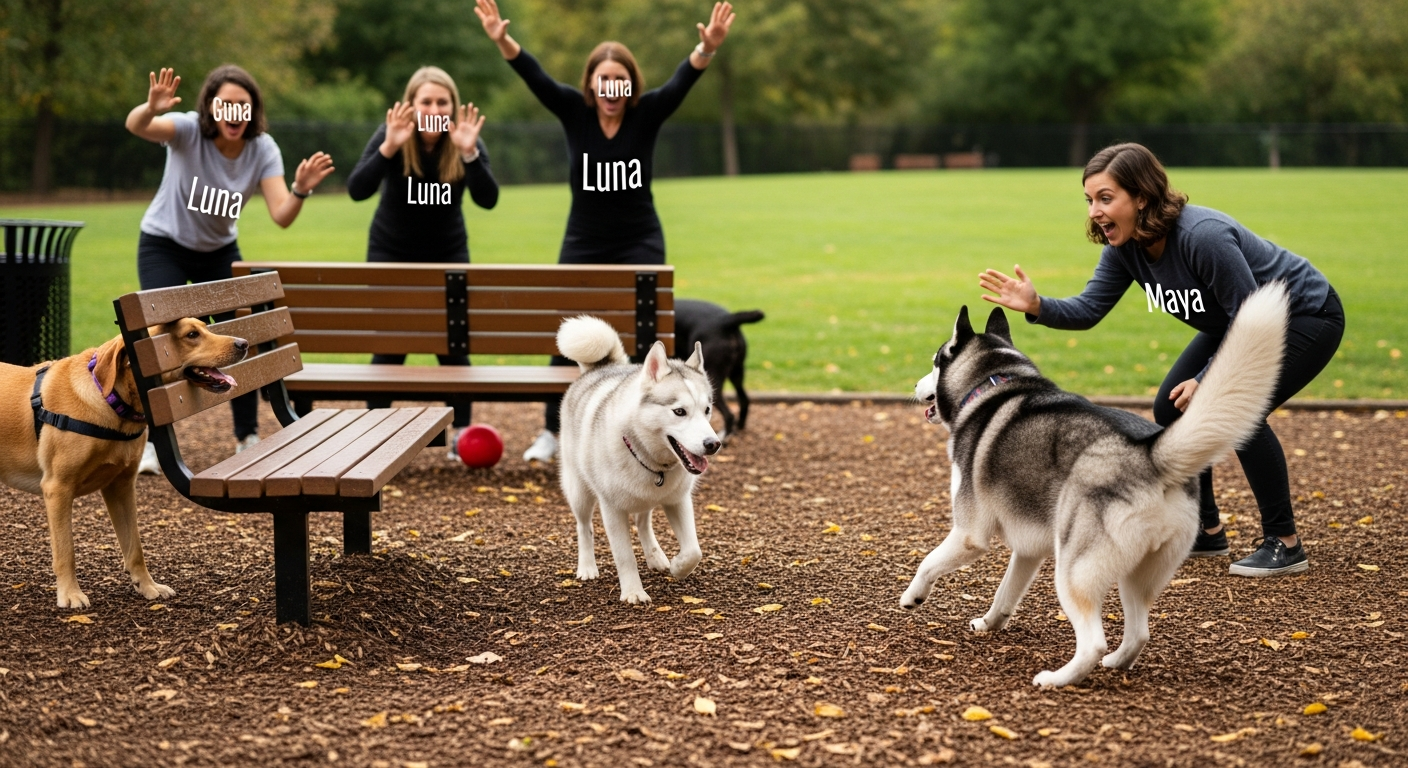
Hello and welcome. Today we’re talking about the deceptively simple thing that can make or break your life with a dog: the name you call across a crowded park, at the daycare counter, and into a digital record that follows your dog for years. This clicked for me in a Brooklyn dog park. I was ankle‑deep in mulch when three people yelled “Luna!” at the same time, and three different dogs—two Huskies and a lab mix—pinwheeled toward three different owners. A ball rolled under a bench, a stroller squeaked, the gate stood wide open, and for one breathless second, nobody knew which Luna was about to shoot for freedom. That’s when trends stop being cute and start being consequential. I’m a naming consultant for dogs—yes, that’s real—and sensible owners ask me: do trends actually matter, or is this all vibe? They matter when your environment makes them matter. In crowded daycares, multicultural neighborhoods, and increasingly digital systems, the difference between a name that works and a name that creates chaos can be safety. A week before the Luna pile‑up, a client named Maya called about her new Siberian Husky. “He’s perfect,” she said. “But his name… we’re not sure.” She’d called him Ghost. Of course she had. Between snowy coats and pop‑culture, Ghost had become the Husky default. And Huskies hit two arenas hard: parks and daycares. If the name is trending, they’ll be sharing it with a third of the class. “Is that really a problem?” she asked while Ghost did figure eights around her tote. “It is when you need one‑to‑one recall,” I told her. “Or when a staffer needs to medicate at two o’clock and there are five Ghosts waiting for peanut‑butter pill pockets.” I learned that the messy way at a midtown daycare I consulted for. They had six Coopers in one playgroup. Six. One Friday, a Cooper with a peanut allergy almost got the wrong treat because the chart said “Cooper F” and a kennel tech thought the F stood for flavor. Nobody got hurt; we caught it. But from that day I warned clients: if your dog will live in communal care, trend awareness isn’t a branding flex—it’s a safety practice. I call it the Cooper Conundrum: avoid stacking identical names in the same environment whenever you can. So with Maya, we ran a field test. We took Ghost to the busiest corner of the park near the gate. She called “Ghost!” three times. He looked up once, then got swallowed by the chorus of other Ghosts ricocheting across the mulch. We tried Rune and Rook—short, crisp consonants, not trending, easy to throw over traffic. Huskies are clever and independent; you want a sound that cuts but doesn’t rhyme with no, sit, or stay. Rook snapped him out of a sniff tunnel instantly. Rune worked too. Ghost… not so much. “I love the vibe of Ghost,” she said. “I don’t love the chaos.” “You can honor the vibe without sharing the frequency,” I told her. We put Ghost on his tag as a nickname and made Rune his primary name for training, vet records, and anywhere he’d be in a group. Two letters changed, and his missed recalls dropped by more than half in our next session. The daycare later told us he was their only Rune. In a row of gray lockers labeled Luna L., Luna P., Luna K., “Rune” glowed like a neon exit sign. That’s the key: vibe names can be nicknames; work names need to be unique. And here’s what people overestimate: how hard it is for the dog. Dogs adapt beautifully to names when the new sound arrives with consistent, positive reinforcement. The tricky bit isn’t teaching the dog—it’s helping the human accept that personality and functionality can happily coexist. Sometimes the challenge isn’t duplicates—it’s meaning. I was volunteering with a rescue moving dogs from Puerto Rico to New England. A foster chat lit up about a sandy Jack Russell mix named Bicho. On paper, that’s “little bug.” But in some Spanish‑speaking communities on the mainland, it can be crude slang. The adopter, a Boston teacher on a Spanish‑speaking block, wrote, “I love his shelter name. I just don’t want to accidentally shout something rude across the Common.” Jack Russells have their own traps. People love to call them Jack, and then they end up in group classes where three Jacks pinball under the same command. Add the working‑dog vibe—Rocket, Scout, Trigger—and you’ve got an echo chamber of rugged, repetitive names. Here we had two layers: a slang risk plus a breed prone to doubles. We tested sound‑alikes: Bicho to Biko, Bijo, Becho. He turned his head to Biko with the same wag he showed for Bicho—no confusion. The adopter kept the first‑letter familiarity to honor his shelter story and sidestepped the unintended meaning. That’s the goal: local dignity, global portability. You’re not being precious; you’re making life smoother for everyone who’ll hear and say your dog’s name in public. Now, the least glamorous piece that matters more than you think: digital systems. During the pandemic, curbside vet visits and online forms became the norm. I helped a multi‑clinic group audit their patient database. They had 48 Bellas across three locations, four spellings of Zoey, and two Milos with different microchip numbers in the same record because a receptionist guessed the spelling over the phone. Text reminders went to the wrong owner. A refill request was approved for the wrong dog. A lost pet alert got delayed because the shelter couldn’t find the right profile quickly. Everyone was well‑intentioned; the system just wasn’t built for that much duplication and variation. Here’s what clients thank me for a year later: - Pick one spelling and stick to it everywhere: vet, groomer, daycare, city license, microchip registry, training app, insurance. - Avoid special characters and punctuation some databases strip out. - Choose something easy to spell over the phone. - If you want an uncommon spelling, fine—just be ready to spell it every time and add “responds to” in notes. - Upload a current photo to every portal. - If there’s a nickname and a work name, tell providers both and designate the primary. - When you update a name, update all records within the same week. Consistency is a safety net. How do you test a name in the wild before it bites you? I use five quick checks: 1) Supermarket test: Say it out loud three times like you’re calling down an aisle. It should project clearly and not sound like a common command. One or two strong consonants help. 2) Crowd test: In a busy spot, call it once at normal volume and once at “bus is coming” volume. Look for a clean head turn within two seconds. If your dog is new, start at home and build up. 3) Duplicate test: Ask your daycare, walkers, and vet how many dogs with that name they see in a week. If your cohort already has three, consider a variant or a unique work name. 4) Cultural sweep: Spend five minutes checking whether the sound means something you don’t intend in languages spoken around you. Not perfection—just fewer sidewalk surprises. 5) Paperwork check: Search the name in local rescue alumni pages or lost‑and‑found groups. If you get dozens in your zip code, decide whether you’re okay being number fourteen or if a small tweak could make you the only one. None of this means you have to abandon the name that makes your heart light up. Separate vibe and function. Keep the dreamy, sweet, pop‑culture nickname for cuddles on the couch. Choose a clean, distinctive work name for recall, for the vet, for group care. You can even teach: “When you hear Rune, it means business; when you hear Ghost, it means snuggles.” Dogs can handle that nuance. Humans benefit most. If you already have a dog and the name is causing friction, no dramatic rechristening required. Evolve it. Shorten it, sharpen the consonants, pick a sound‑alike with less collision, or assign the current name to home life and introduce a work name outside. Pair the new sound with irresistible rewards for a week and watch how fast your dog gets it. Let me leave you with the picture that set this all in motion: three Lunas, one open gate, one second where it wasn’t clear whose dog was about to bolt. Trends are fun—until they become traffic. Names aren’t just labels anymore. They’re tools that have to function across parks, clinics, databases, and communities. Pick a name that’s clear, distinctive, respectful of your environment, and consistent across systems, and you create smooth pathways for your dog’s safety and your peace of mind. So today, take five minutes. Say your dog’s name the way you’d shout it across a field. Ask your daycare how many they have with that name. Decide on one spelling. Update your vet portal photo. And if you’re still deciding, try your top two at the park and let your dog tell you which one cuts through the noise. Two dogs, two names, one lesson: the best name isn’t just the one you love—it’s the one that works when it matters.