Why Does My Cat Bite Me When I Pet Them? Understanding Feline Love Bites in 2025
Here’s a stat that blew my mind when I first read it: nearly 40% of cat owners report being bitten by their cat at least once a month. And most of those bites? They happen right in the middle of what seemed like a perfectly peaceful petting session.
I remember the first time my cat did this to me. She was purring, eyes half-closed, looking completely blissed out on my lap. I was scratching behind her ears, feeling like the best cat parent in the world. Then bam — teeth sinking into my hand out of nowhere. No warning. No hissing. Just purring one second and chomping the next.
What the heck, right?
If you’ve landed on this article, chances are you’ve experienced something similar. And you’re probably wondering if your cat secretly hates you, or if there’s something wrong with them. The good news? Neither is true. Cat biting during petting is incredibly common, and once you understand why it happens, you can actually do something about it.
So let’s dig into this. I’ve spent years observing cats, talking to behaviorists, and honestly just making a lot of mistakes with my own furballs. What I’ve learned might save your fingers — and your relationship with your cat.
What Are Cat Love Bites and Why Do They Happen?
First things first: not all bites are created equal. There’s a massive difference between a “love bite” and an actual aggressive attack, even though both involve teeth on skin.
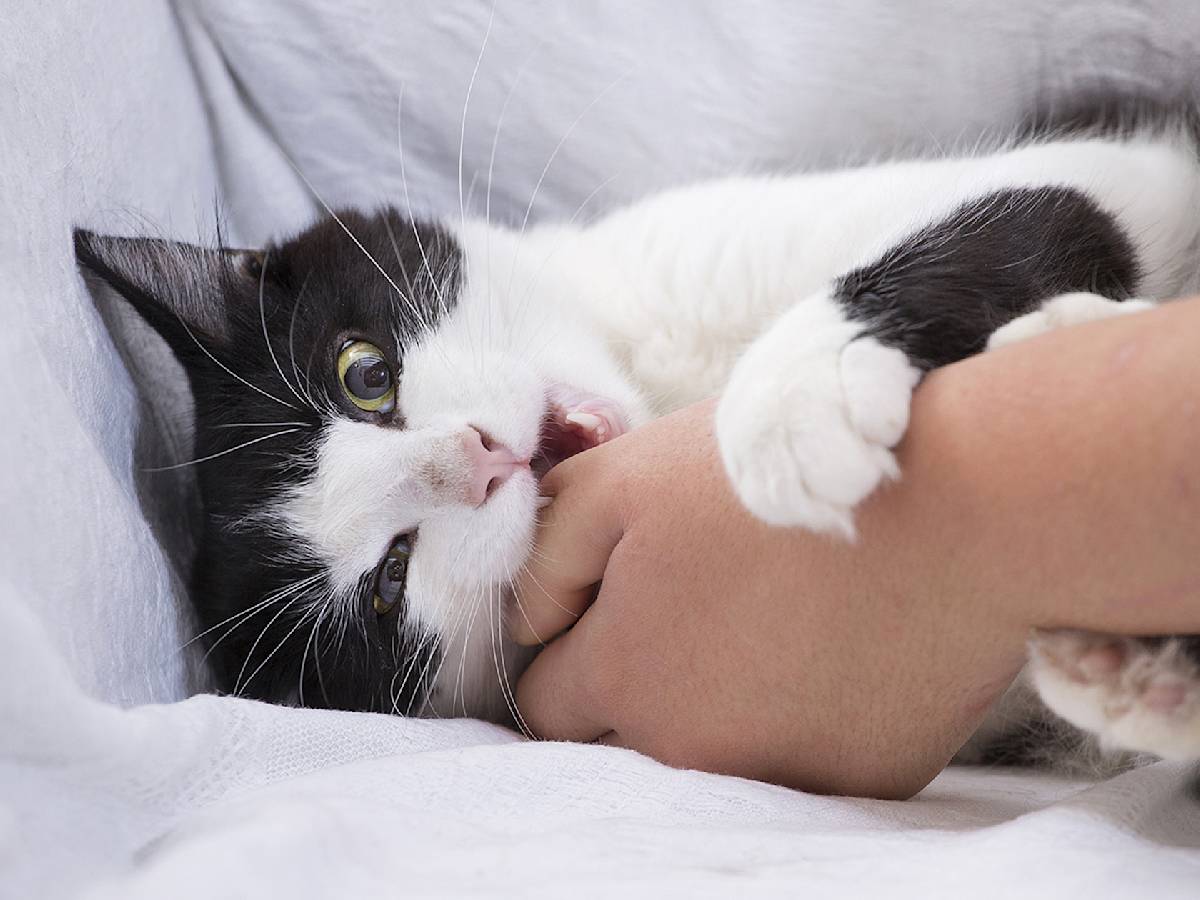
A love bite is usually gentle. It’s more of a nibble, really. Your cat might grab your hand softly, maybe hold it for a second, and then let go. There’s no blood. No real pain. It almost feels like they’re… communicating something. And that’s exactly what’s happening.
Cats don’t have words, obviously. So they use their bodies to tell us things. A love bite is often their way of saying “okay, that’s enough” or sometimes even “I like you, but I’m done now.” It’s not anger. It’s just cat language.
The problem is that we humans are terrible at reading it. We see a cat purring and assume everything is fine. We don’t notice the subtle signs that came before the bite. And then we get confused when those teeth come out.
True aggressive bites are different. They’re harder, faster, and usually accompanied by other warning signs — hissing, growling, flattened ears, dilated pupils. If your cat is doing that, you’re dealing with something else entirely. But if your cat just randomly nips you mid-cuddle while still purring? That’s almost certainly overstimulation, and it’s way more common than actual aggression.
Overstimulation — The #1 Reason Your Cat Bites During Petting
Let me tell you about something called “petting-induced aggression.” Sounds fancy, but it’s really just a scientific way of saying your cat got overwhelmed by too much touching.
Here’s the thing about cats: their nervous system is wired differently than ours. They have incredibly sensitive skin, especially along their back and near the base of their tail. What feels like a nice, relaxing stroke to us can actually become irritating — even painful — to them after a while.
Think of it like someone tickling you. The first few seconds? Maybe fun. After a minute straight? You’d probably smack their hand away too.
I learned this the hard way with my second cat, a tabby named Oliver. This guy would literally walk up to me, demand pets, and then bite me after about 30 seconds. Every. Single. Time. I thought he was broken or something. Turns out, he just had a lower tolerance for physical contact than my other cat.
Some cats can handle 10 minutes of petting. Others max out at 30 seconds. There’s no universal rule. You have to learn your specific cat’s threshold. And the only way to do that is by paying attention to their body language — which, I’ll be honest, I was terrible at for years.
The belly is a classic trap, by the way. A cat rolls over, exposes their tummy, and we think it’s an invitation. It’s usually not. For most cats, the belly is a vulnerable area, and touching it triggers a defensive response. That “cute” belly exposure is often just them stretching or showing they feel safe enough to relax — not an invitation to rub.
How to Read Your Cat’s Body Language Before the Bite
Okay, this is where things get practical. Because cats almost always give warnings before they bite. We just miss them.
The tail is your best friend here. A relaxed cat has a still tail or one that’s gently swaying. But if that tail starts flicking back and forth quickly? That’s irritation building. The faster the flick, the closer you are to getting bitten.
Ears are another huge tell. Forward-facing ears mean your cat is engaged and happy. Ears that start rotating sideways or flattening back? They’re getting annoyed. By the time the ears are fully flat against the head, you’ve already missed your window.
Then there’s the skin ripple. This one took me forever to notice. When a cat is reaching their limit, the skin along their back will sometimes twitch or ripple. It’s subtle, but once you see it, you can’t unsee it. That ripple is basically your cat’s body saying “I’m about to lose it.”
Pupil dilation matters too. Relaxed cats have normal pupils. A cat whose pupils suddenly go wide — even in normal lighting — is experiencing a spike in arousal or stress. Combined with other signs, it’s a clear “stop petting me now” signal.
The tricky part? The window between the first warning sign and the actual bite can be really short. Sometimes just a few seconds. So you have to be watching actively, not just zoning out while you pet them. I know, it sounds like a lot of work for something that’s supposed to be relaxing. But trust me, once you get the hang of it, reading your cat becomes second nature.
Other Reasons Your Cat Might Bite When Petted
Overstimulation is the big one, but it’s not the only reason your cat might chomp during cuddle time.
Pain is a sneaky culprit. Cats are masters at hiding discomfort. If your cat suddenly starts biting when you touch a specific area — say, their lower back or hips — there might be something going on physically. Arthritis, skin conditions, even dental issues can make normally pleasant contact painful. If the biting is new and localized, a vet visit is worth it.
Past trauma plays a role too, especially in rescue cats. A cat who was handled roughly before might have learned that petting leads to bad things. Their bite isn’t about you — it’s a defensive reflex they developed to protect themselves. These cats need extra patience and very slow trust-building.
Sometimes it’s just play. Kittens and young cats especially will bite during petting because they haven’t learned to separate play behavior from affection. They’re not trying to hurt you. They just think your hand is a fun toy. This is actually one of the easier problems to fix with consistent redirection.
And occasionally? Your cat is just trying to get your attention for something else. Maybe they want food. Maybe they want you to stop petting and start playing. The bite is their way of changing the activity. Annoying? Yes. Malicious? Not really.
How to Stop Your Cat From Biting When You Pet Them
Alright, here’s what you actually came for: solutions.
The number one thing you can do is respect your cat’s limits. I know it sounds obvious, but seriously — most of us push past the warning signs because we’re enjoying the cuddle. Stop before your cat asks you to stop. If you know your cat maxes out at 2 minutes of petting, stop at 1 minute 45 seconds. Leave them wanting more. It sounds counterintuitive, but shorter, positive sessions build more trust than long sessions that end in biting.
Learn the safe zones. Most cats enjoy being petted on the head, cheeks, and chin. The base of the ears is usually a hit. The back can be okay for some cats, but approach with caution. Belly and tail base? Proceed at your own risk. Every cat is different, but starting with the head and face is your safest bet.
When your cat does bite, don’t react dramatically. No yelling, no yanking your hand away fast, no punishment. All of that just teaches your cat that biting gets a big reaction — which can actually reinforce the behavior. Instead, just calmly stop petting and withdraw your hand. No attention, no drama. The message is simple: biting ends the good stuff.
Positive reinforcement works wonders. If your cat lets you pet them without biting, give them a small treat. Over time, they associate calm behavior during petting with rewards. This is especially effective for cats who bite out of habit rather than genuine overstimulation.
For cats with very low tolerance, you can try desensitization. Start with incredibly short petting sessions — like 5 seconds — and gradually increase the duration over weeks. The goal is to slowly expand their comfort zone without ever pushing them to the point of biting. It takes patience, but it works.
When Cat Biting Becomes a Real Problem — Signs to Watch
Most cat biting during petting is normal and manageable. But sometimes it crosses a line.
If your cat is biting hard enough to break the skin regularly, that’s a concern. Cat bites can actually be dangerous — their mouths carry bacteria that can cause serious infections. Any bite that punctures the skin should be cleaned thoroughly, and if you see signs of infection (redness, swelling, fever), get medical attention.
Behavioral red flags include biting that happens outside of petting contexts, biting combined with other aggressive behaviors like stalking or attacking, or a sudden change in a previously gentle cat’s behavior. These could signal pain, neurological issues, or severe stress.
If you’re dealing with any of these, it’s time to call in professionals. Start with your vet to rule out medical causes. If the cat gets a clean bill of health, a certified animal behaviorist can help you work through the issue. There’s no shame in asking for help — some cats have complex histories or needs that require expert guidance.
Don’t let anyone tell you it’s “just how cats are” if the biting is severe or frequent. Yes, occasional love bites are normal. Regular aggressive biting is not, and it’s usually a sign that something needs to change — either in the cat’s environment, their health, or how they’re being handled.
Conclusion
So here’s the deal: your cat probably doesn’t hate you. They’re not biting because they’re mean or because you did something wrong. Cats just communicate differently than we do, and biting during petting is usually their way of saying “that’s enough for now.”
The key is learning to read their signals. Watch the tail. Watch the ears. Notice when the skin starts to ripple. And most importantly, respect their boundaries even when you want to keep cuddling. Shorter, positive interactions beat long sessions that end badly every time.
If you’ve been struggling with a bitey cat, try some of the techniques I mentioned — stopping before they ask you to, sticking to safe zones, rewarding calm behavior. It won’t change overnight, but with consistency, most cats can learn that petting time doesn’t have to end in teeth.
I’d love to hear about your experiences. Does your cat have a particular spot that triggers the chomp? Have you found tricks that work for your specific furball? Drop a comment below and let’s compare notes. After all, every cat is different, and sometimes the best advice comes from other cat parents who’ve been through the same thing.
Now go give your cat a chin scratch. Just, you know… watch those ears.


![Expert guide: The 13 Game-Changing "Should You Rename Your Dog?" Tips That Actually Work [2025] - Related article](https://kkvwzwmtnwoewxanoyzg.supabase.co/storage/v1/object/public/images/images/batch/batch-1762682912681-the-13-game-changing-should-you-rename-your-dog-ti.jpg)