Transcription Audio
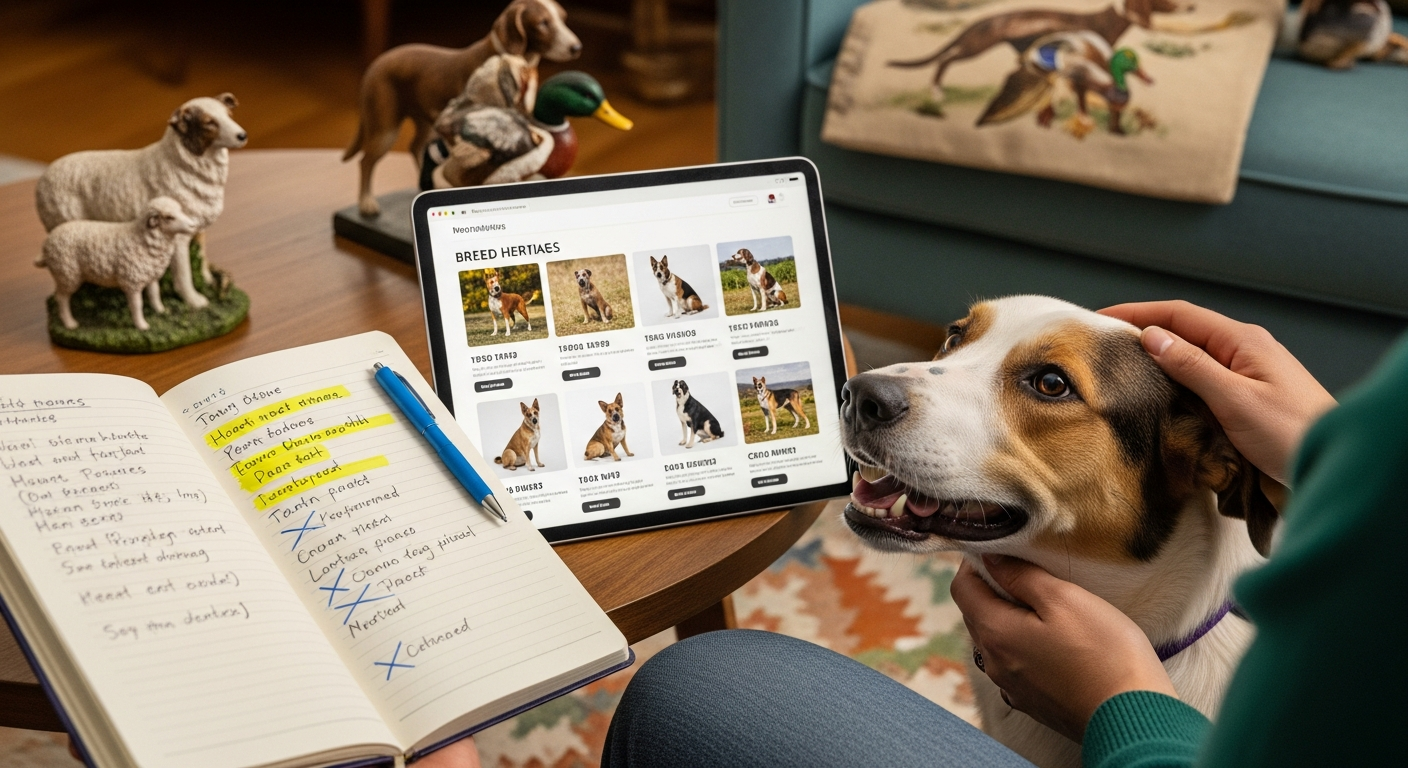
How to Brainstorm Dog Names That Honor Breed Heritage—or Capture One Dog's Singular Personality
9 novembre 2025
Listen to audio:
Transcript Text
Hello and welcome. If you’ve ever stood in a pet-store aisle whispering ideas into a collar like it’s a seashell, you know: naming a dog isn’t trivial. It’s a training tool, a daily ritual, and a tiny cultural artifact you’ll say thousands of times. Today, I’ll give you a simple way to find a name that actually means something—honoring your dog’s heritage, capturing their personality, or both. Great dog names do two jobs at once. First, they carry meaning—you enjoy telling the story for years. Second, they work as a tool—easy to call, distinct from common commands, and clear in a noisy park. Let’s start with the tool. Dogs don’t process names like we do. They respond best to crisp sounds—solid consonants and clear vowels. In real life, that’s the difference between a dog that comes when called and a dog that tilts their head and keeps sniffing. If the name is a gentle mumble in the wind, recall gets harder. Before you brainstorm, pick a North Star: heritage, personality, or a hybrid. Decide once and keep it visible. I like hybrid—about eighty percent your priority, twenty percent flavored by the other. That’s how you get names that feel deep but not forced. If you choose heritage, don’t just google “cute names for X breed.” Do a quick dive on origin, function, and culture. I call it the Heritage Grid. Where did the breed come from? What job did it do? What words, stories, and places are tied to that region? For a Jack Russell Terrier—19th-century England, foxhunting, compact rocket fuel—pull from British countryside and hunting language: Tally (from “Tally-ho”), Bracken (the fern), Cricket (lively), Pip (quick, cheerful), Midge (tiny, opinionated). They’re crisp and playful across a field. Now the Siberian Husky—tracing back to the Chukchi people of northeastern Siberia, endurance sled dogs built for long distances and harsh weather. Instead of Snow or Ice, reach for geography and nature: Taiga (the great forest), Lena (a river), Baikal (the deep lake), Aurora (northern lights), Misha (a warm Russian nickname). Beautiful, pronounceable, and they quietly carry the story of the north. On cultural respect: when drawing from Indigenous or less familiar languages, double-check meanings with a reliable source and choose words you can say clearly. Lean into place names, nature, and common given names. Skip sacred terms and stereotypes. A good name honors without pretending. How do you turn research into options without drowning? Make five small name banks: - Places: regions, rivers, mountains. - Function: tools and lingo tied to the breed’s job. - Nature: plants, animals, weather. - People and characters: surnames and literary figures from the region. - Sounds you like: letters and rhythms your mouth loves—your sound palette. If you’re going personality-first, your job is observation. Treat your dog like a character in a short film. How do they enter a room? Bounce like a spring, glide like a shadow, greet like a social butterfly, or watch carefully? Translate those vibes into words, then into names. A zippy, playful pup: Cricket, Jinx, Zuzu. A serene presence: Harbor, Sol, Mellow. Witty and mischievous: Puck, Riff. These names feel like the dog they belong to. The real magic is the hybrid. Start with heritage to set your palette, then let personality choose the final color. Picture a Husky who’s goofy and affectionate: Taiga might feel too stately, but Misha nails both origin and cuddly vibe. A Jack Russell who’s focused and fast: Bolt might be on the nose; Tally carries heritage and still pops. Sound design, in plain terms: aim for one or two syllables; three is okay if it’s snappy. Strong openings like K, T, P, B, and D cut through noise. Distinct vowel shapes help your dog tell their name apart from everything else. Watch rhymes with commands: Kit can sound like Sit; Bo can blur into No. If you’ve got multiple pets, avoid echoing first letters and rhythms—Luna and Lola means both will look up and neither will listen. Trends? Movie and meme names spike fast and fade. If that delights you, go for it. But for staying power, heritage and personality are timeless. And uniqueness isn’t national—it’s local. Your dog only needs to be unique in your neighborhood, your training class, and your vet’s waiting room. If there are three Bellas at your park, you’ll know it in a week. That’s the uniqueness that matters. Here’s a quick process you can do today: 1) Set a ten-minute timer. Pick your North Star—heritage, personality, or hybrid. 2) Jot your five mini-banks: places, function, nature, people, and sounds you like. 3) Mix and match to get a dozen candidates. Speed beats perfection here. Next, a whisper-shout test. Say each name softly, then call it like you’re summoning your dog across a city sidewalk. Does it roll off your tongue when you’re a little out of breath? Stay clear when you raise your voice? If you feel silly or tongue-tied, drop it. Then a real-world test. Grab a handful of treats. Call the name once. If your dog looks, mark it with a yes and reward. Repeat with your top three. You’re not training yet—you’re checking which sounds instantly hook your dog’s attention. Dogs cast their votes with their eyes and ears. Do a clash check. Does the name sound like a command you’ll use daily—Sit, Down, Stay, Come, No, Drop, Off, Leave it? If it’s too close, keep looking. Also ask: is it easy for friends, your vet, and your family to say? If your grandma can pronounce it and your neighbor remembers it, that’s a good sign. Sleep on your shortlist. Wake up and say the names while imagining a stranger asking, “What’s the story behind it?” If you smile telling that story, you’ve found your name. If you hear yourself apologizing or explaining the pronunciation three times, pass. Worried about changing your mind? You’ve got a grace period. In the first week or two, swapping a name is fine. Dogs tie a name to value—attention, treats, fun—not to your paperwork. Pick a direction, pair it with good things, and they’ll love it. A few quick inspirations: - Jack Russell with bright, fast energy: Tally, Pip, Cricket. - Husky with shimmer and stamina: Taiga, Aurora, Misha. Hear how each lives in the mouth—clean openings, clear vowels, easy to call. And permission to go simple and classic if that fits your dog: - A sturdy, friendly Lab named Gus. - A dignified Doberman named Nora. - A goofy mutt named Disco. The right name earns a grin when you say it and a head turn when your dog hears it. Remember, a dog’s name isn’t just a label. It’s a story you’ll tell again and again, and a sound you’ll use to bring your best friend back to you. Anchor that story in heritage, personality, or a smart blend of both. Respect the cultures you borrow from. Choose sounds that carry. Keep it local—your park, your living room, your life. If you want to go deeper, the written guide has frameworks, examples, and research notes. But you’ve got enough to start today. Pick your North Star. Build your banks. Test out loud. And when you find the name that makes you smile and your dog swivel their ears—say it, celebrate it, and make it mean something together. Thanks for spending this time with me. Give your dog a scratch for me, and happy naming.