Transcription Audio
The Future of Dog Naming: Functional, Inclusive, and Smart—Built for Working Dogs and Mixed Breeds
9 novembre 2025
Listen to audio:
Transcript Text
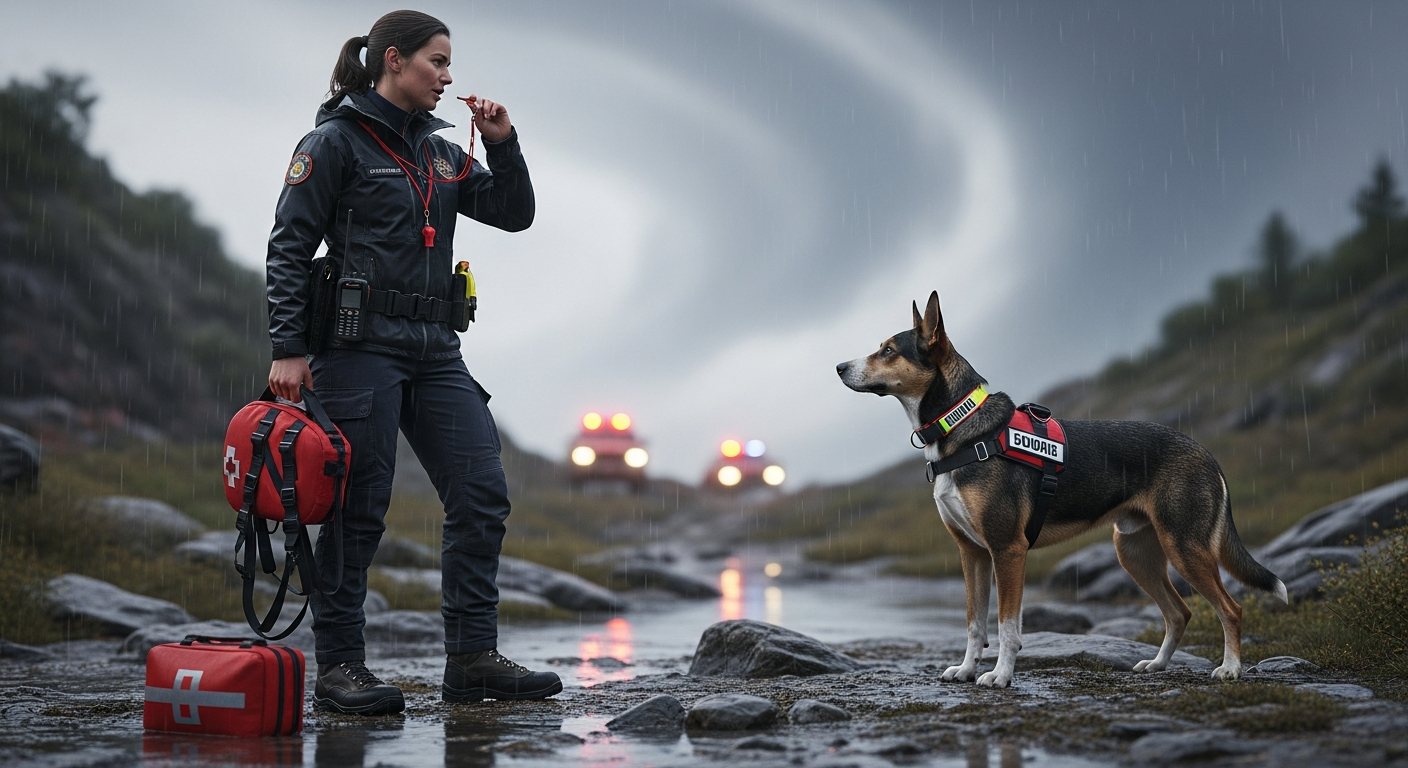
Hello and welcome. Today we’re talking about something that sounds tiny but changes everything: your dog’s name. Not the cute caption—the tool you’ll use thousands of times, in quiet rooms and chaotic moments. Picture a handler calling her dog across a rain-soaked ravine. Sirens, wind, radio chatter. One crisp name cuts through the noise, and the dog pivots. That’s not luck. That’s design. After years around detection dogs, guide candidates, therapy teams, and beloved mixed-breed companions, I’ve learned this: we treat names like fashion when they’re actually equipment. The future of naming isn’t about trends. It’s about function, inclusivity, and how well that name performs in the real world. And yes—this matters for your dog too. Most folks pick names for charm, not clarity. We recycle the same 20 names until every park sounds like a roll call—Bella, Max, Luna. Not “bad,” but in classes, clinics, and crowded parks, duplication creates confusion. And with mixed-breed dogs, there’s added pressure to be witty or on-trend, when what you’ll actually need is a name that works with wind, traffic, and adrenaline. Working-dog programs have known this forever. Names carry function. There’s science here: certain consonant-vowel patterns cut through noise better, especially under stress. A name that’s crystal in your living room can turn to mush outside. Data backs it up: crisp, two-syllable names with strong onsets are recognized faster in high-noise environments. What’s changing now? A pivot to acoustics first—people ditching soft, murky names for punchy, two-syllable options. More context-aware naming—separate duty names and house names in SAR, detection, and guide programs. Digital interoperability—microchips, QR tags, and smart collars carrying pronunciation notes and contact layers. And a push toward stigma-free, heritage-neutral names that work across languages. One more wrinkle: avoid names that sound like Alexa, Siri, or Google. That loop wrecks training. Let’s make this practical with a simple playbook. Build a name stack—one dog, three names: - Call name: your everyday recall engine. Two syllables, strong onset (K, T, P, B, D), and a vowel that carries—ah, uh, oh. Think Koda, Tika, Rocco, Nala. It should feel effortless when you’re tired or shouting across a field. - Work name: your operational alias for crowded or noisy settings, or when your call name is too common. If there are three Konas, flip to Ruva, Jett, Paxo—names that don’t collide with commands. Handlers report faster responses in multi-dog deployments because the airwaves aren’t clogged with the same syllables. - Digital handle: your metadata tag living in microchip notes, QR tag, and smart collar. Include the name, phonetic pronunciation (Ruva = ROO-vah), language variants, and your contact protocol. Already have a name? Keep it. Introduce the work name as a fun game with big rewards. It becomes a second doorbell to their brain. Next, run every name through the F-LAC framework—Function, Lexicon, Acoustics, Culture. Function: - What jobs will the name do? For SAR or detection, it must punch through wind and sirens. For therapy visits, it should sound friendly. For guide dogs, it must be easy for the public to say. Ask: can I spit this out clearly when my heart rate is up? Lexicon: - Avoid collisions with words you use most: No, Down, Stay, Heel, Leave it, Drop, Out, Off, Wait, Search, Here. Don’t choose a name that rhymes or shares the same acoustic shape. - Avoid names that sound like Alexa, Siri, Google, or your smart-home wake words. - Check household vocabulary—kids’ names, roommates, other pets. Acoustics: - Favor two syllables, strong onset (K, T, P, B, D), clean vowel finish (ah, uh, oh, ee). If you speak softly, lean sharper. Lots of S and Sh smear in wind. Test it in the real world—shout, whisper, and speak in rain. Culture: - Names live in public. Choose options that are inclusive, bilingual-friendly if needed, and free of stigma. Avoid names that read as threatening in hospitals or stereotype your dog’s breed mix. For mixed breeds, lean heritage-neutral—easy for anyone to say, anywhere. Run these quick tests: - Shout Test: stand 50 feet away and call three times—does it stay crisp? - Wind Test: step outside on a breezy day or use a fan—does it cut through? - Whisper Test: can a child or stranger say it softly and be understood? - Radio Test: record it, play it through a low-quality speaker—still clear? - Stranger Test: hand the name to a friend from a different language background—can they pronounce it on the first try? How to choose: - Generate a shortlist of five names that pass F-LAC. Say them in real sentences: Kit, come. Tika, here. Rocco, leave it. - Rotate them through three environments in one weekend: your living room, a busy parking lot, and a windy park. - Whichever name stays crisp in all three gets the nod. Training notes: - A name isn’t a correction; it’s a cue to orient to you. Pair it with great things—treats, toys, access. - Keep it short and punchy. Resist stacking commands—“Kona come sit down.” Say the name, get the head turn, then give the cue. - If you’ve got a work name, protect it. Use it only when you need that precise, immediate response. Multi-dog households: - Pick names that don’t rhyme and don’t share first syllables. Koda and Kona? Too close. Mix vowels and consonants so each name occupies different acoustic space. - Play name discrimination games: say one name, reward only that dog for orienting. It’s fun and sharpens clarity. By life stage: - Puppies: the world is your lab. Shape the sound from day one with high-value pairings and quick reps. - Rescues: yes, you can rename kindly. Pair old + new for a week or two—“Luna—Ruva”—then fade the old. Always followed by something fantastic. - Seniors: hearing changes. Lower pitches and open vowels often carry better. Names ending in ah or oh can beat tight, high ee sounds. Add hand signals as backup. Tech tips: - If you use a smart collar or QR tag, include pronunciation, language variants, medical notes, and your preferred contact method. If the name is uncommon or from another language, add phonetics. - Keep the digital handle short, unique, and searchable—your dog’s call sign in the cloud. Culture and mixed breeds: - Your dog doesn’t need a costume name to be interesting. The best names are respectful, practical, and timeless. They work in a pediatric ward and on a trail, in English and Spanish. They don’t hinge on jokes that will age out or labels that box your dog in. They honor who your dog can become. If you want a quick start, try this: - Pick one punchy, two-syllable call name with a strong onset. - Pick one distinct work name that shares no sounds with your commands. - Create one digital handle with pronunciation notes and languages. - Test them in wind, on a voice memo, and with a stranger. Then commit. Because at the end of the day, this isn’t really about names. It’s about clarity under pressure. It’s about building habits that make your dog’s life safer and your partnership smoother. A name is a handle for attention. Make it sturdy. Make it kind. Make it smart enough to carry through ten years and ten thousand calls. I’m cheering you on as you build your stack and run your tests. May your next call slice clean through the noise, and may your dog pivot with joy every time they hear it.